- The National Security "Blanket Exemption": Grounded in Article 4(2) of the Treaty on European Union (TEU), the Council secured a total carve-out for AI systems used solely for military, defense, or national security purposes. This exemption also extends to private defense contractors
- Confidential Database Partitions: While the Parliament wanted transparency, the Council successfully lobbied for a confidential, non-public partition of the EU database for sensitive police and border surveillance tools
- RBI Friction: The Council fought for law enforcement's right to use Remote Biometric Identification (RBI) in real-time to prevent terrorist threats or track suspects of serious crimes
The Institutional Battlegrounds of the EU AI Act
The journey of the AI Act was not merely a technical drafting exercise but a highly
contested geopolitical and institutional struggle. The final text reflects a fragile
balance between three competing visions: market safety, fundamental rights, and
national sovereignty.

The European Commission: The Product Safety & Vision
The Commission’s original philosophy was built upon the New Legislative Framework
(NLF), traditionally used for European product safety legislation (like rules for lifts or machinery).
- Regulatory Philosophy: The Commission proposed a proportionate, risk-based classification to avoid "choking" Europe's nascent AI ecosystem
- Enforcement Architecture: Beyond just the AI Office, the Commission proposed a decentralized enforcement model where Member States designate "notifying authorities" (to accredit third-party testers) and "market surveillance authorities" (for post-market checks)
- The AI Board: Originally envisioned as a body to ensure harmonized implementation across all 27 Member States
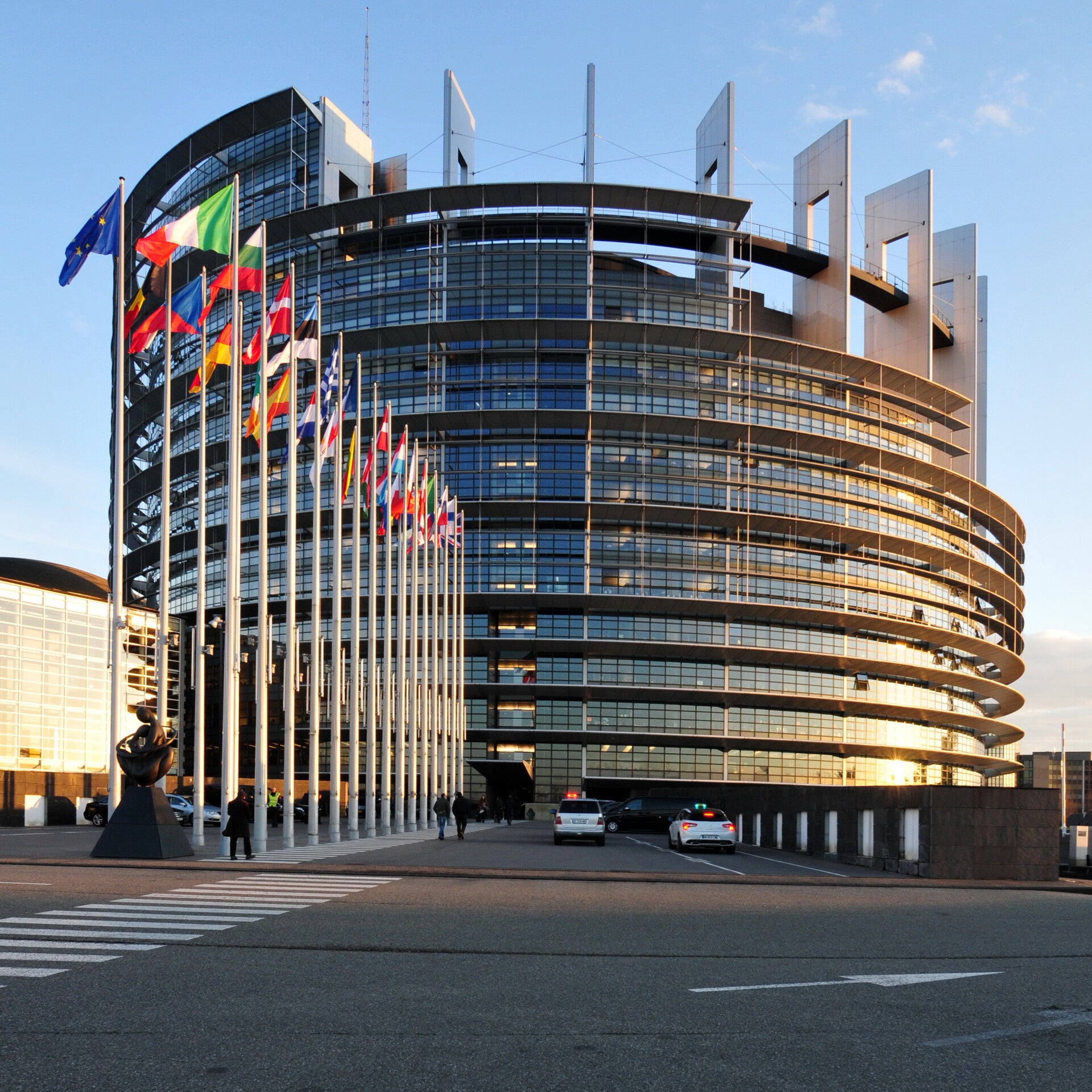
The European Parliament: Rights, Transparency, and "Deployer" Duties
Parliament sought to significantly expand the scope of the Act to protect citizens from state and commercial surveillance.
• Fundamental Rights Impact Assessments (FRIAs): Lawmakers successfully insisted that deployers (public bodies, banks, or hospitals) - not just the developers - must evaluate how high-risk AI impacts local populations before nasazení (deployment).
• The Public Database: Parliament demanded that public authorities must register their use of high-risk systems in an EU-wide public database, making state algorithmic use transparent to civil society.
• Algorithmic Accountability: They pushed for stricter transparency for "Very Large Online Platforms" (VLOPS) to disclose how their recommender systems demote or promote content.

The Council: Policing Power and "Article 4(2)"
Representing national governments, the Council focused on preserving "sovereign domains".
• The National Security "Blanket Exemption": Grounded in Article 4(2) of the Treaty on European Union (TEU), the Council secured a total carve-out for AI systems used solely for military, defense, or national security purposes. This exemption also extends to private defense contractors
• Confidential Database Partitions: While the Parliament wanted transparency, the Council successfully lobbied for a confidential, non-public partition of the EU database for sensitive police and border surveillance tools
• RBI Friction: The Council fought for law enforcement's right to use Remote Biometric Identification (RBI) in real-time to prevent terrorist threats or track suspects of serious crimes

The Geopolitical "Sovereign Lobby" (Key Member States)
The negotiations reached a dramatic deadlock in late 2023 due to the intervention of the EU's three largest economies, often called the "Sovereign Lobby".
• France (Mistral AI & Cédric O): The French government’s position was heavily shaped by a domestic lobbying campaign led by Mistral AI co-founder Cédric O. They argued that strict rules for foundation models were an "existential threat" to European tech. President Macron famously warned against "overregulation" that would handicap domestic champions
• Germany (The Merz Turn & Industrial AI): Initially, the German "traffic light" coalition was split. However, the position hardened under Chancellor Friedrich Merz, who pushed for an "Industrial AI Carve-out". This led to the 2026 compromise where AI-enabled industrial machinery is regulated under the Machinery Regulation instead of the AI Act to avoid double compliance
• Italy (Criminal Sanctions & Minors): Italy’s Law 132/2025 went further by criminalizing unauthorized data scraping (Article 171) and introducing 1–5 years of imprisonment for harmful deepfakes. They also set a strict age of consent: children under 14 cannot use AI systems without parental consent

The Technical Compromise: The "FLOPs" Threshold
To resolve the dispute over General-Purpose AI (GPAI), the institutions agreed on an objective technical threshold.
• Compute-Based Regulation: All GPAI models must follow basic transparency and copyright rules
• Systemic Risk: Any model trained with a total compute exceeding 10²⁵ FLOPs (floating-point operations) is presumed to have "high-impact capabilities" and must follow much stricter safety mandates, including adversarial testing and incident reporting
- Fundamental Rights Impact Assessments (FRIAs): Lawmakers successfully insisted that deployers (public bodies, banks, or hospitals) - not just the developers - must evaluate how high-risk AI impacts local populations before nasazení (deployment)
- The Public Database: Parliament demanded that public authorities must register their use of high-risk systems in an EU-wide public database, making state algorithmic use transparent to civil society
- Algorithmic Accountability: They pushed for stricter transparency for "Very Large Online Platforms" (VLOPS) to disclose how their recommender systems demote or promote content
Create Your Own Website With Webador